 KILL-FRUIT-FLIES.COM
AT A GLANCE
Red-eyed and smooth, or fuzzy and moth-like?
| Clue | Fruit fly | Drain fly |
|---|---|---|
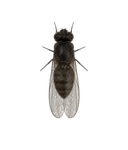
| Appearance | About 1/8 inch; yellowish-brown to dark brown; often red eyes. | About 1/10 inch; dark gray; fuzzy body and hairy, moth-like wings. |
| Where adults gather | Around ripe produce, fermenting liquids, trash, recycling, or similar residue. | On walls, sinks, and surfaces close to drains or other wet breeding areas. |
| Likely breeding material | Fermenting fruit, vegetables, liquids, and moist organic residue. | The organic film in persistently wet plumbing or other polluted wet material. |
| Primary response | Remove fermenting sources and use traps to reduce adults. | Physically remove the film, correct leaks, and investigate plumbing if activity persists. |
FRUIT FLIES
Look near fermentation
Fruit flies are small, smooth-bodied flies drawn to ripe or fermenting fruit and vegetables. They also gather around beverage residue, trash containers, garbage disposals, and drains containing organic material.
Red eyes are a useful clue, but color varies. Location alone is not proof: seeing a fly near a sink does not automatically make it a drain fly.
DRAIN FLIES
Look for fuzz and persistent moisture
Drain flies—also called moth flies—have a fuzzy, moth-like appearance created by hairs on the body and wings. They rest near sinks and drains. Their larvae develop in moist organic material, including the film that builds up inside plumbing.
Hot water alone does not reliably remove that film. Colorado State University Extension recommends mechanically cleaning the material and correcting leaks or plumbing defects.
CHECK BEFORE TREATING
Three useful observations
- 01Photograph one up close.
Use phone zoom and compare the body and wings—not just the room where it appeared.
- 02Watch where adults return.
Produce and beverage residue point toward fruit flies; repeated resting immediately around a drain points toward drain flies.
- 03Inspect the source.
Check fermenting food and containers as well as wet plumbing residue, leaks, and hidden moisture.
USE THE RIGHT PLAN
Match the cleanup to the fly
For fruit flies, begin with the kitchen source-removal checklist and use a trap for adults. For drain flies, remove the organic film in the affected plumbing and address leaks or broken pipes. If the insect remains uncertain or the source is inaccessible, contact a qualified pest or plumbing professional.
COMMON QUESTIONS
Identification FAQ
Can fruit flies breed in drains?
Yes. They use drains containing moist fermenting organic material. Also check produce, containers, trash, recycling, disposals, and damp cleaning items.
Are all tiny flies near sinks drain flies?
No. Fruit flies and phorid flies can also appear around plumbing. Appearance and breeding material matter more than the room alone.
Will a fruit fly trap catch drain flies?
Even when a trap catches adults, drain-fly control requires removing the wet organic film where larvae develop and correcting moisture problems.
FACT-CHECK SOURCES